
The Short Answer: 15 to 30 Years
A properly built asphalt driveway lasts 15 to 30 years. The spread is wide because the surface you see is rarely what fails first.
Two driveways paved in the same week can end up a decade apart in service life. The difference is almost always the base underneath and whether anyone kept up with maintenance.
In Toronto, the ceiling is a little harder to reach than in milder climates. Freeze and thaw cycles run from November through April, and every one of them works water deeper into the pavement.
What Separates a 15 Year Driveway From a 30 Year One
Four things account for most of the variation. None of them are visible once the job is finished, which is why cheap driveways look identical to good ones for the first two years.
| Factor | Effect on lifespan |
|---|---|
| Base depth and compaction | Largest single factor. A thin or poorly compacted base can cut life in half |
| Drainage and slope | Standing water shortens life by 5 to 10 years |
| Asphalt thickness | Adds 3 to 7 years when specified correctly for the load |
| Sealcoating and crack repair | Adds 5 to 10 years when done on schedule |
The Base Does the Work
Asphalt is flexible. It spreads load rather than resisting it, which means the granular base below carries the actual weight.
A residential driveway needs roughly 6 to 8 inches of compacted granular base, more where the native soil is clay. Getting the excavation and base right before any asphalt is laid is the single best predictor of whether you are back in 15 years or 30.
Water Is the Enemy
Water that drains off does nothing. Water that pools soaks into the base, freezes, expands, and lifts the surface from below.
A driveway needs about 2 percent slope away from the house. Flat sections, low spots, and blocked edge drainage are where failures start.
What Shortens an Asphalt Driveway
- Unsealed cracks. A hairline crack is cosmetic. The same crack after two winters is a channel feeding water straight into the base.
- Road salt and de icing chemicals. Salt tracked in from Toronto streets accelerates surface ravelling, especially on driveways that were never sealed.
- Heavy vehicles. Dumpsters, moving trucks, and contractor equipment concentrate load on a surface designed for passenger cars.
- Oil and fuel leaks. Petroleum products dissolve the binder that holds the aggregate together, leaving soft spots that turn into holes.
- Tree roots. Mature maples along older ON streets lift pavement from underneath, and the damage is usually structural by the time it shows.
- Paving too late in the season. Asphalt laid in cold weather does not compact properly and starts breaking down early.
The Maintenance Cadence That Actually Matters
Most owners either do nothing or seal every year, and both are wrong. Over sealing builds up brittle layers that crack on their own.
| Timing | Task |
|---|---|
| First 6 to 12 months | No sealing. New asphalt needs time to cure. Keep heavy loads off it the first summer |
| Year 1 to 2 | First sealcoat once the surface has cured |
| Every 3 to 5 years after | Reseal. Sooner if the surface has gone grey and porous |
| Every spring | Walk the driveway. Fill any crack wider than a pencil line before summer |
| Year 10 to 15 | Assess for resurfacing if the base is still sound |
Sealing on that schedule is the cheapest years you will ever buy. A sealcoat application every few seasons protects the binder from UV and salt, which is what keeps the surface from ravelling into loose aggregate.
Crack repair matters more than sealing, though it gets less attention. Sealing a cracked driveway without filling the cracks properly first just paints over the problem.
How to Tell You Are Near the End
Surface issues are usually fixable. Base failure is not.
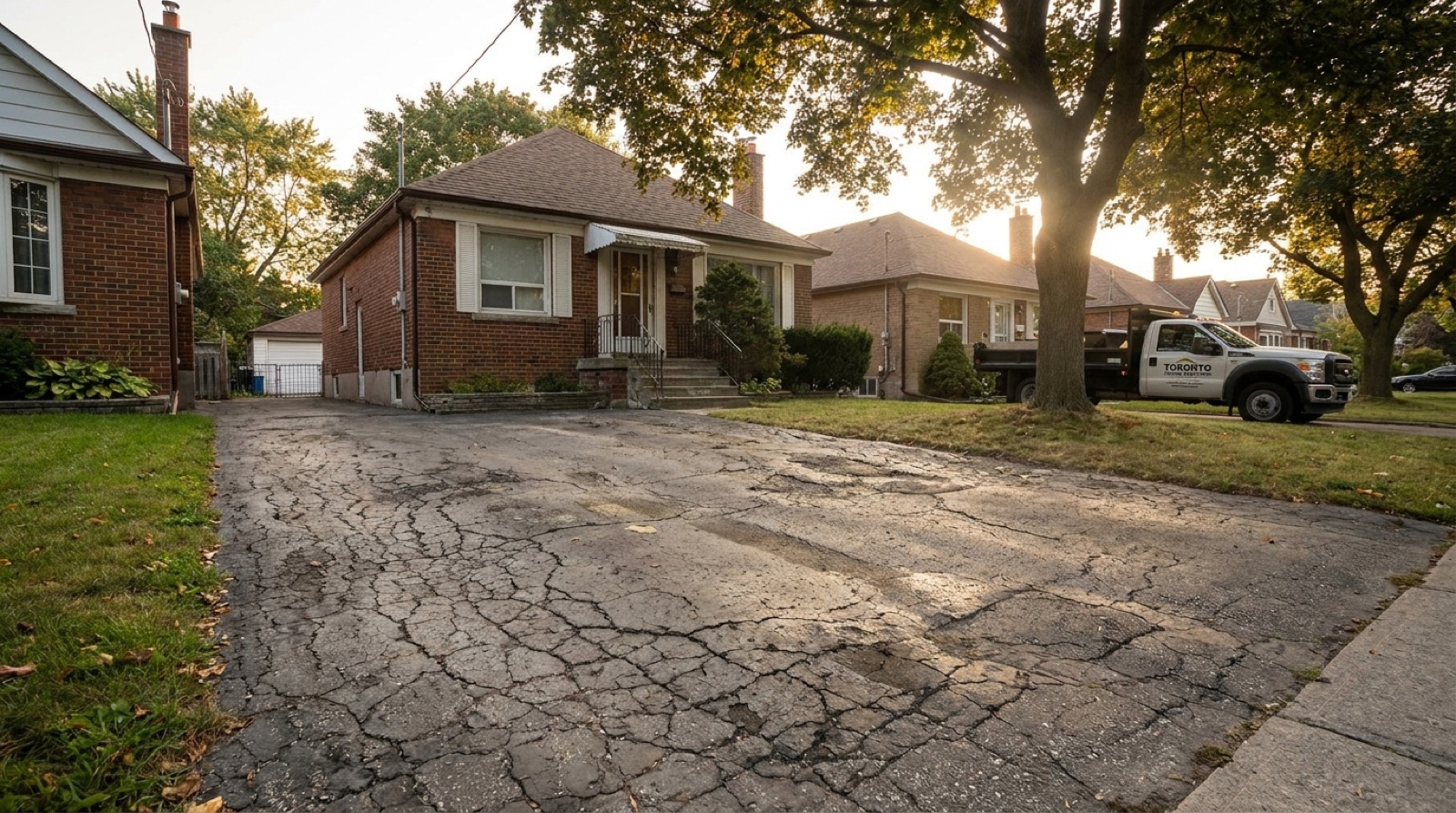
Alligator cracking, where the surface breaks into a web of connected sections, means the base has failed underneath. Sinking areas, edges that crumble away, and potholes that keep returning in the same spot point the same direction.
Widespread grey colour, loose stone underfoot, and cracks you can fit a finger into signal a driveway in its final years. One or two of these is a repair. All of them together is a replacement conversation.
Repair, Resurface, or Replace
If the base is sound and the damage is confined to the top layer, resurfacing is the economical move. A new lift of asphalt over the existing surface buys another 10 to 15 years at a fraction of full replacement cost.
Resurfacing only works if the underlying structure holds. An overlay on a failing base will mirror the same cracks within two or three winters.
Once the base has gone, full removal and rebuild is the only option that resets the clock. It costs more upfront and it is the only path back to a 30 year driveway.
Not sure which category yours falls into? Get in touch for an assessment and quote and we will tell you honestly whether you are looking at a repair or a rebuild.